Ingredients
Turmeric and hibiscus, read correctly
Two of the most misread botanicals in West African skincare, and what they were always intended to do.
Atelier Alata
March 2026
6 minute read
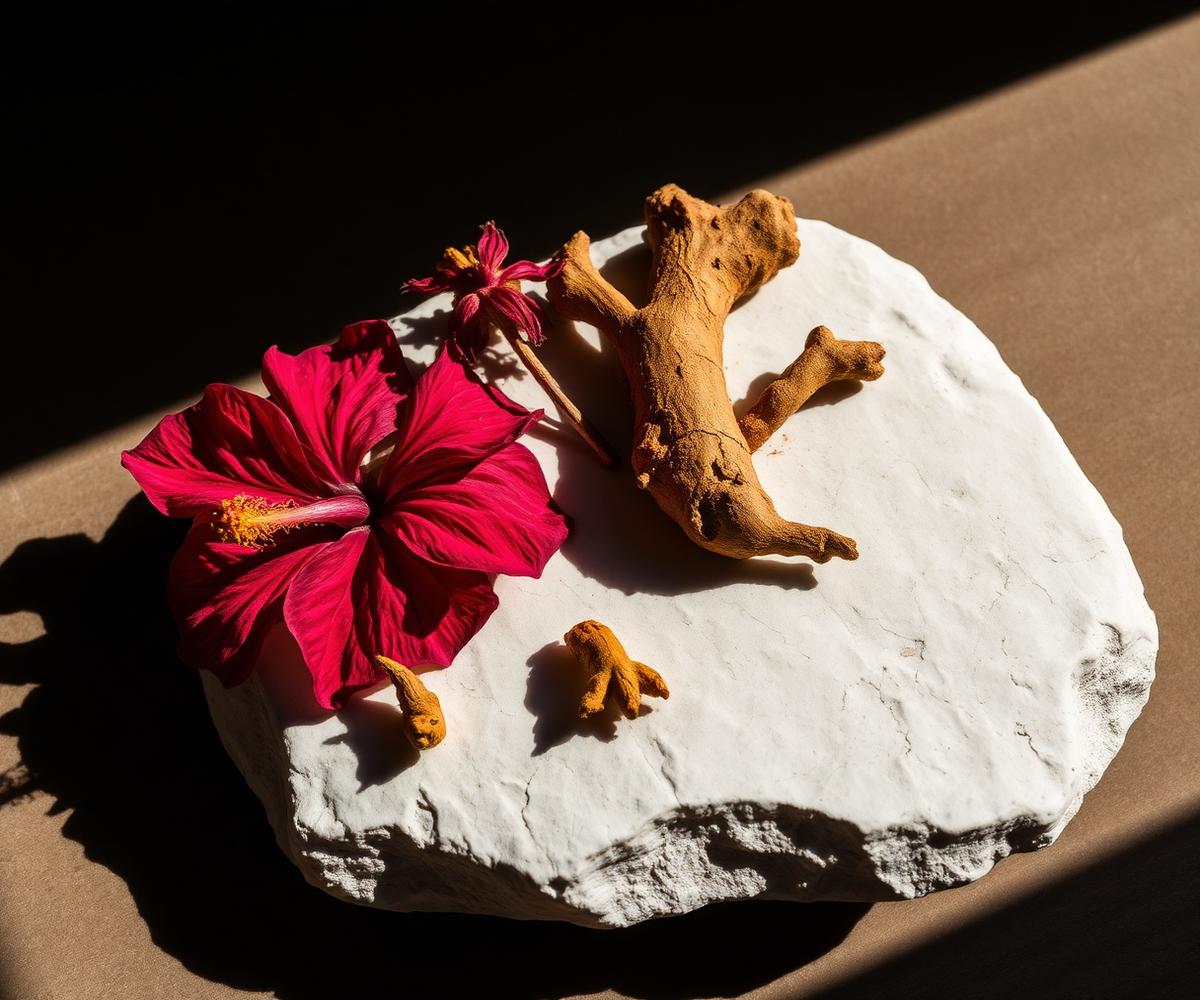
Turmeric arrives in the market as a bright ochre root, sold in small heaps beside ginger and grains of paradise. Hibiscus arrives dried, deep crimson, folded into paper. Neither is exotic here. Both have been part of household care in this part of the world for longer than any brand has existed, and both have been badly translated by the industry that later discovered them.
Brightness is not lightening
The confusion begins with a single word. Brightness, in the language of traditional preparation, describes clarity. It is the look of skin that is not congested, not dulled by dead surface cells, not inflamed. It has nothing to do with removing pigment. A face that has been treated with turmeric looks rested and even, because turmeric is quietly anti inflammatory and because the fine grain of it lifts away what has settled on the surface.
Lightening, by contrast, is a chemical act against the skin's own melanin. It is a different intention entirely, with a different history, and it has caused real harm across the continent. We say this plainly because the distinction matters. Nothing in our formulation is designed to change the colour of anyone's skin.
Brightness in African botanicals has always described clarity, never a lighter shade.
What hibiscus actually does
Hibiscus carries naturally occurring acids, mild enough to be used on the face several times a week. They loosen the bond between dead cells at the surface so that the skin can shed on its own schedule rather than accumulate. The result is a face that reflects light more evenly. That even reflection is what people are describing when they say a product made them glow.
Used alongside aloe, as we prefer, the acids stay gentle. Aloe cools and holds water in the tissue, so the exfoliating effect never tips over into tightness. This is the balance the older preparations understood instinctively, long before any of it was written down.
How to use them well
Little and often. Turmeric and hibiscus reward patience rather than intensity. Two or three considered uses a week, followed by oil or butter while the skin is still damp, will do more than a single aggressive session. Give it a full cycle of the skin, roughly four weeks, before you judge the result.
Related
Face Cleanser